
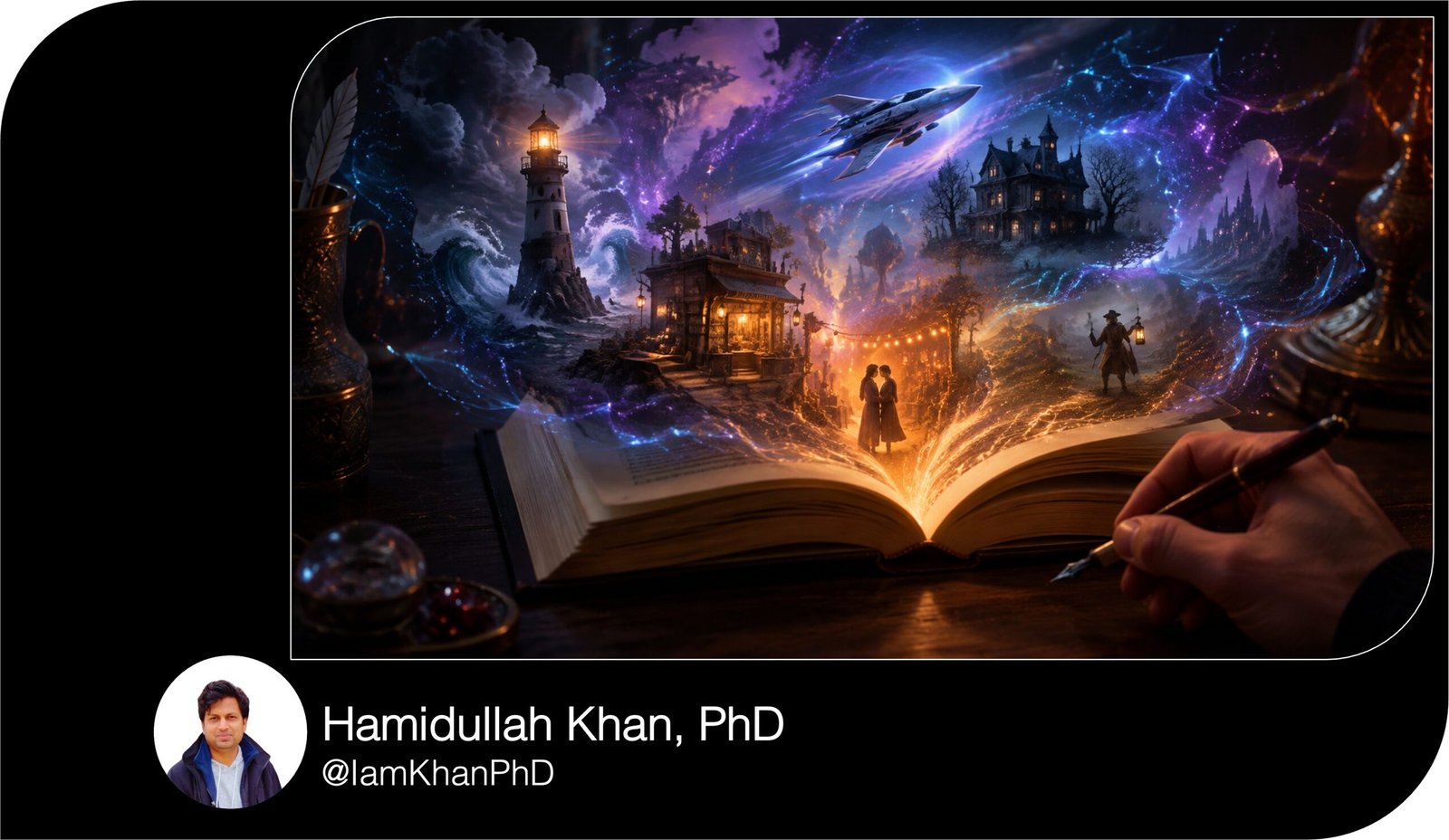
Short Story Prompt Pack: 10 AI Prompts for Fiction Writers
Create original, polished short stories with this collection of 10 detailed and editable AI prompts. Designed for beginners, the pack covers mystery, romance, fantasy, science fiction, horror, suspense, historical fiction, and emotional contemporary storytelling. Simply customize the bracketed sections, paste a prompt into your preferred AI tool, and generate a story shaped around your ideas.
What This Prompt Pack Does
- Helps users generate complete short stories with clear characters, settings, conflicts, clues, and satisfying endings.
- Provides editable placeholders for changing the genre, tone, story length, point of view, relationships, and plot details.
- Guides the AI beyond generic ideas by specifying story structure, emotional stakes, recurring elements, and essential scenes.
Tips for These Prompts
- Replace as many bracketed sections as possible to make the result more personal and original.
- Generate a first draft, then ask the AI to revise one element at a time, such as dialogue, pacing, atmosphere, or ending.
- Treat the AI’s output as a creative starting point and review it for originality, consistency, accuracy, and suitability before publishing.
How to Use the Prompts
- Choose a story prompt and replace the information inside [square brackets] with your preferred details.
- Copy the entire edited prompt and paste it into ChatGPT or another compatible generative AI writing tool.
- Review the generated story, then request specific changes—for example: “Make the opening more suspenseful” or “Rewrite the ending with a hopeful twist.”
10 Short Fiction Story Prompts for AI Writers
10 Editable AI Prompts for Short Fiction Stories
Replace the words inside [square brackets] with your own ideas. You can also leave a placeholder unchanged and let the AI make the creative choice.
10 Short Creative Writing Prompts for Middle School
1. The Locked-Room Mystery
Prompt:
Write a complete [1,500–2,500]-word locked-room mystery set in [location, such as an isolated lighthouse, luxury train, old theater, or mountain hotel] during [time period or weather event].
The main character is [name], a [age]-year-old [occupation] who is observant but struggles with [personal weakness, fear, or secret]. When [victim’s name or role] is found [describe the mysterious situation], every person present appears to have an airtight alibi.
Include [3–5] suspects, each with a believable motive, a personal secret, and one suspicious behavior. Plant at least four fair clues throughout the story. Include one convincing red herring, but make sure the final solution can be logically deduced from the real clues.
Write in [first-person/third-person] point of view with a [tense, atmospheric, witty, or classic detective] tone. Use natural dialogue, sensory descriptions, and steadily increasing tension.
The solution must depend on [an overlooked object/a misunderstood timeline/a false assumption/a hidden relationship]. End with the detective explaining how the crime happened, why it happened, and which earlier clues revealed the truth.
Do not provide an outline or commentary. Write the polished story with a compelling title.
10 Short Creative Writing Prompts for High School Students
2. A Message from Tomorrow
Prompt:
Write a complete [1,200–2,000]-word speculative fiction story about [protagonist’s name], a [occupation or role] living in [place and year], who receives a message from exactly [number] days/years in the future.
The message says: “[insert warning, request, or mysterious sentence].” It appears through [an old phone/a radio/a handwritten letter/a computer file/an unusual object], and it contains one detail that nobody except the protagonist should know: [private detail].
At first, the protagonist believes [initial explanation]. However, three increasingly strange events prove that the message may be genuine. The protagonist must choose between [choice A] and [choice B], knowing that either decision could change [a relationship, a life, a community, or the future].
Include:
- A clear rule explaining how communication with the future works.
- A personal emotional conflict connected to [regret, grief, ambition, guilt, or love].
- One discovery that changes the meaning of the original message.
- A final consequence that feels surprising but logical.
Use [first-person/third-person] narration and a [hopeful, unsettling, emotional, or suspenseful] tone. Focus on character and consequences rather than technical explanations.
End with [a hopeful resolution/a tragic sacrifice/an ambiguous final message/a circular twist]. Give the story an original title and write the complete narrative—not a summary or outline.
10 Short Creative Writing Prompts for Kids I Editable AI Prompt Pack
3. The Time Loop with a Hidden Purpose
Prompt:
Write a complete [1,500–2,500]-word time-loop story in which [protagonist’s name], a [brief character description], repeatedly experiences the same [hour/day/event] in [setting].
Every loop begins when [opening event] happens and resets when [reset trigger] occurs. The protagonist initially tries to use the loop to [personal goal], but eventually discovers that escaping requires helping [another character] confront [problem, secret, or danger].
Establish three consistent rules for the time loop:
- [Rule about what resets]
- [Rule about what the protagonist remembers or keeps]
- [Rule about what causes changes between loops]
Show at least four loops, but make each one meaningfully different. Do not repeat identical scenes. Use each loop to reveal a new clue, relationship detail, mistake, or consequence.
Include a recurring object or phrase—[object or phrase]—whose meaning changes as the story progresses. Build toward the revelation that the loop exists because [hidden reason].
Write in [first-person/third-person] with a [funny, emotional, suspenseful, or philosophical] tone. Balance the unusual premise with believable emotions and vivid dialogue.
End with [the loop breaking/the protagonist choosing to remain/the loop transferring to someone else/an ambiguous final reset]. Provide a memorable title and the complete polished story.
10 Short Fiction Writing Prompts for AI Story Creation
4. The Magical Shop That Appears Once
Prompt:
Write a complete [1,200–2,000]-word cozy fantasy story about [protagonist’s name], a [occupation or role] who is dealing with [personal problem].
While walking through [town, city, village, or neighborhood] on [specific kind of day or night], the protagonist discovers a shop called “[shop name]” that has never been there before. The shop sells [unusual magical products], and its owner, [shopkeeper’s name], offers the protagonist one item: [magical object].
The object can [magical ability], but using it has a subtle cost: [emotional, relational, or magical price]. The shopkeeper provides this warning: “[short warning].”
Structure the story around three uses of the object:
- The first use produces a small, delightful result.
- The second use creates an unexpected complication.
- The third use forces the protagonist to choose between [personal desire] and [someone or something important].
Create a warm, enchanting atmosphere using details such as [scents, sounds, food, weather, décor, or magical creatures]. Include gentle humor, natural dialogue, and an emotionally satisfying character change.
End with the shop disappearing, but leave behind [one object, sign, memory, or hint] suggesting that its magic was real. Use a [heartwarming, bittersweet, whimsical, or hopeful] tone and give the story an inviting title.
Short Story Prompt Pack: 10 Editable Narrative Ideas
5. The Stranger Who Knows Too Much
Prompt:
Write a complete [1,500–2,500]-word psychological suspense story about [protagonist’s name], a [occupation] living in [setting].
During [an ordinary activity], the protagonist meets [stranger’s name or description], who casually mentions [a private event, memory, or secret] that the protagonist has never shared with anyone.
The stranger then makes a disturbing prediction: “[prediction].” Within [time period], the first part of that prediction comes true.
Build the suspense through:
- Three encounters in which the stranger reveals increasingly private information.
- A clue connected to [photograph, childhood object, missing person, old news story, or forgotten location].
- A trusted character who may be hiding something.
- One believable false explanation.
- A midpoint revelation that changes what the protagonist thinks the stranger wants.
The protagonist’s biggest fear is [fear], and their hidden mistake is [past action or secret]. Make both details essential to the central mystery.
Use close [first-person/third-person] narration so readers experience the protagonist’s uncertainty. Keep the threat believable and avoid explaining everything too early.
In the final scene, reveal that the stranger is actually [choose yourself, or insert the desired identity]. The ending should be [shocking, ambiguous, tragic, or cautiously hopeful], but it must connect logically to clues planted earlier. Include an intriguing title.
Short Story Idea Generator: 10 AI Prompts for Writers
6. Rivals Trapped Together
Prompt:
Write a complete [1,500–2,500]-word romantic short story about two rivals who are forced to work together.
Character one is [name], a [occupation or role] who is [three personality traits] and secretly wants [personal goal]. Character two is [name], a [occupation or role] who is [three contrasting traits] and is trying to protect [secret, reputation, person, or dream].
They are rivals because [specific history or conflict]. During [competition, work assignment, journey, wedding, storm, or community event], they become trapped or isolated in [location] for [length of time].
Include:
- Sharp but playful dialogue that reveals their history.
- A practical problem they can solve only by cooperating.
- A quiet moment in which each character reveals a vulnerability.
- A misunderstanding based on incomplete information—not a conversation that could be solved instantly.
- A small gesture involving [object, food, song, or shared memory] that changes their relationship.
- Romantic tension without rushing emotional trust.
Use alternating [first-person/third-person] perspectives or choose the viewpoint of [character]. Keep the tone [funny, tender, dramatic, or bittersweet].
End with [a first kiss/an honest confession/a promise to meet again/a decision to pursue a relationship]. Make the resolution emotionally earned and include a charming title.
Grade 2 Narrative Writing Prompts
7. First Contact in an Unexpected Place
Prompt:
Write a complete [1,500–2,500]-word science-fiction story about humanity’s first confirmed contact with extraterrestrial life occurring in [ordinary or isolated location], rather than in a government laboratory or military facility.
The protagonist, [name], is a [occupation or role] whose knowledge of [seemingly ordinary skill] becomes unexpectedly important. The alien presence first appears as [sound, pattern, organism, signal, object, or environmental change].
Design the alien intelligence with these features:
- It communicates through [method].
- It understands [concept] but cannot understand [human concept].
- It wants [goal].
- Contact becomes dangerous because [misunderstanding or incompatibility].
The protagonist works with [secondary character and relationship], but they disagree about whether to [help, hide, study, expose, or destroy] the alien presence.
Include three attempts at communication. Each attempt should improve understanding while also raising the stakes. Avoid portraying the aliens as humans with different appearances; give them a genuinely unfamiliar way of perceiving reality.
The climax should force the protagonist to communicate [a warning, promise, emotion, or moral idea] without relying on spoken language.
Use a [awe-filled, tense, cerebral, emotional, or hopeful] tone. End with a final sign that first contact has permanently changed [the protagonist/humanity/Earth]. Write the complete story with an original title.
Grade 6 Narrative Writing AI Prompts
8. The Forgotten Name in the Family Record
Prompt:
Write a complete [1,500–2,500]-word historical magical-realism story set in [place] during [year or historical period].
The protagonist, [name], is a [age]-year-old [occupation or family role] who discovers that one name—[forgotten person’s name]—has been carefully removed from every family record, photograph, letter, and conversation.
When the protagonist writes the missing name in [old book, family tree, diary, wall, or official document], [subtle magical event] occurs. Each time the name is spoken or written, another forgotten detail returns to the world.
Reveal the mystery through:
- A damaged family photograph.
- A conversation with [elderly relative, neighbor, historian, or former servant].
- A location connected to the missing person.
- One historical detail that shapes the family’s choices.
- A recurring symbol such as [flower, bird, color, song, or household object].
The magic should feel natural within the setting and should not be explained through a complicated system. Use it to explore [memory, identity, injustice, migration, grief, or family loyalty].
The protagonist must eventually decide whether restoring the full truth will [specific negative consequence]. End with [the name being restored/the truth remaining partly hidden/a public act of remembrance/a magical transformation].
Use lyrical but readable language, culturally respectful details, and a [haunting, reflective, hopeful, or bittersweet] tone. Give the story a meaningful title.
10 Narrative Writing Prompts for Grade 5
9. The Voice Inside the House
Prompt:
Write a complete [1,200–2,000]-word supernatural horror story about [protagonist’s name], who moves into [type of house or building] in [location] because [personal reason].
On the first night, the protagonist hears a voice coming from [wall, vent, basement, locked room, old radio, or beneath the floor]. The voice sounds exactly like [person connected to the protagonist] and says: “[disturbing sentence].”
Establish these supernatural rules:
- The voice can speak only at [specific time or condition].
- It knows [kind of information].
- It becomes stronger whenever the protagonist [action].
- It cannot [important limitation].
Increase the fear gradually through three stages: an unsettling sound, physical evidence, and a direct threat. Include one moment when the protagonist believes there is a rational explanation, followed by evidence that makes that explanation impossible.
Connect the haunting to [past tragedy, family secret, former resident, or the protagonist’s guilt]. Use sensory details—especially sound, temperature, darkness, and confined spaces—to create fear without relying on excessive violence.
In the climax, the protagonist must choose whether to [open/seal/destroy/enter] the source of the voice. End with a final line that reveals [the haunting followed them/the voice was protecting them/the protagonist has become the voice/the danger is only beginning].
Use a [slow-burn, claustrophobic, gothic, or unsettling] tone and provide a chilling title.
10 Narrative Writing Prompts for Grade 4
10. The Last Ordinary Day
Prompt:
Write a complete [1,200–2,000]-word emotional contemporary fiction story about [protagonist’s name], a [age]-year-old [occupation or role], who does not know that today will be the last time they [ordinary activity, such as visit a café, see a friend, take a train, or return home].
The reason it is the last time is [a move, breakup, death, closure, life decision, disaster, or major change], but do not reveal this immediately. Let the reader gradually understand through small details.
Set the story during [season, time of day, or local event] in [location]. Include:
- A familiar routine involving [object, place, food, or person].
- A conversation that appears ordinary but gains a second meaning later.
- One memory triggered by [sound, scent, photograph, or song].
- A choice the protagonist almost makes but avoids.
- A recurring image or phrase that appears differently at the end.
Focus on the emotional importance of ordinary moments. Avoid exaggerated speeches and forced tragedy. Let gestures, unfinished sentences, and specific details reveal what the characters cannot say directly.
Use [first-person/third-person] narration and a [nostalgic, tender, bittersweet, quiet, or hopeful] tone. End with the protagonist finally understanding [lesson, truth, or feeling] and taking one small but meaningful action.
Give the story a subtle, memorable title and write the polished narrative—not an outline.


About author










Add comment