
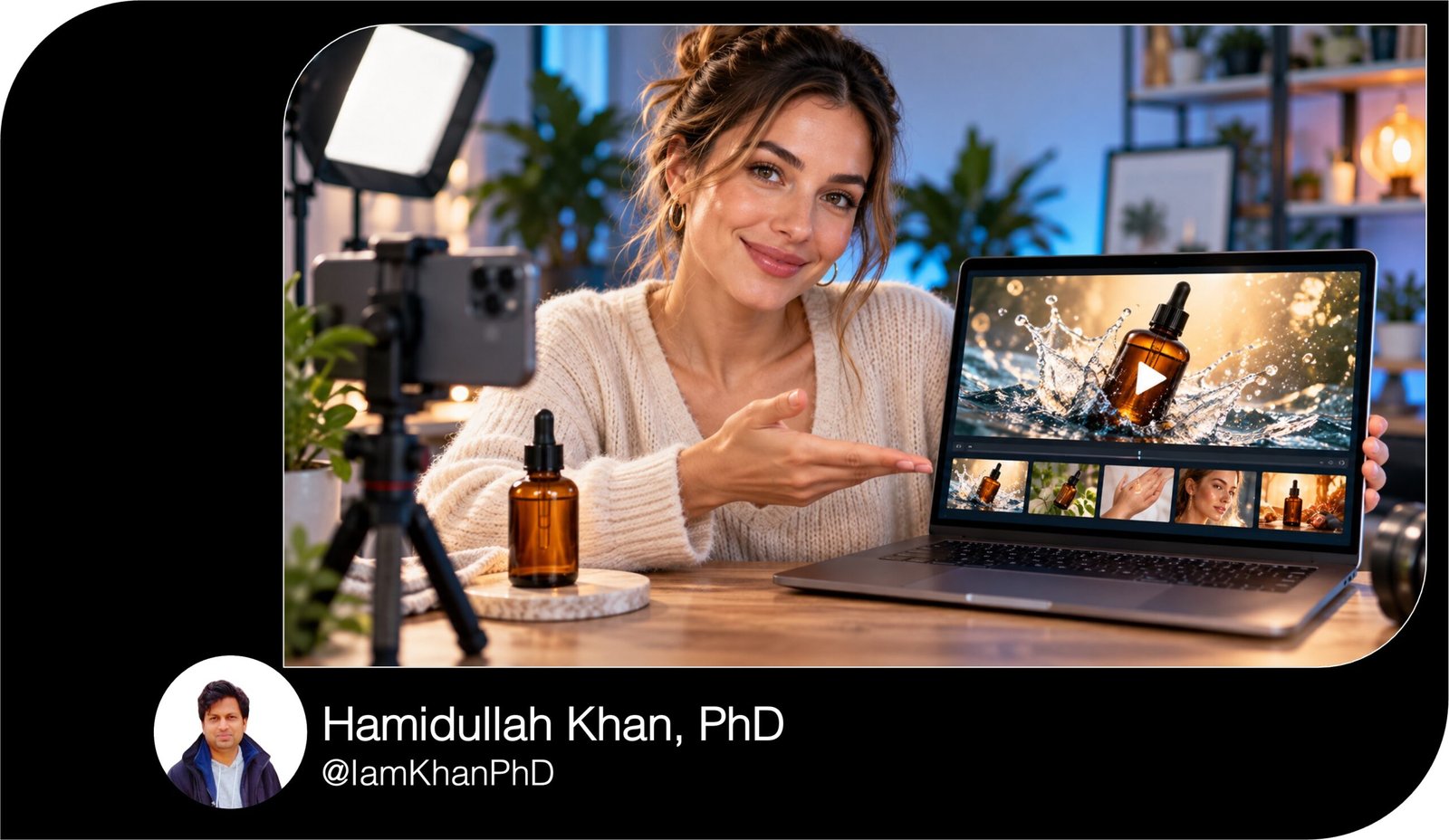
10 Editable AI Prompts for Video Ad Scripts
Turn your product or service details into clear, filmable video ad scripts with 10 detailed AI prompts. Each template includes editable fields and instructions for hooks, timed scenes, dialogue, on-screen text, and calls to action. Made for creators, online sellers, and small business owners with basic AI experience.
What This Prompt Pack Does
- Helps you draft 10 different ad formats, including product demos, founder stories, launch videos, and promotional offers.
- Guides the AI to produce scripts with timing, spoken dialogue, visual directions, and on-screen text.
- Adapts each script to your audience, product facts, brand voice, and desired customer action.
Tips for This Prompt Pack
- Replace broad descriptions with specific details about your customer, their situation, and your product’s benefits.
- Supply verified facts, genuine feedback, and exact offer terms so the AI has accurate material to work with.
- Read each script aloud and time it; shorten awkward lines and check that the scenes are practical to film.
How to Use the Prompt Pack
- Choose the ad format that matches your goal and copy the complete prompt into your preferred AI writing tool.
- Replace every bracketed field with your information; write “not available” for details you do not have.
- Generate the script, check its claims and timing, then request any changes before filming or creating your video.
10 Editable AI Prompts for Video Ad Scripts
Turn product details into video ad scripts with clear hooks, natural dialogue, filming instructions, and calls to action.
Before you begin: Replace the text in [square brackets] with your information, then paste the complete prompt into your preferred AI writing tool. If you do not have a detail, enter “not available” and ask the AI to flag anything that needs your input.
1. The “Problem → Solution” Video Ad
Best for: Showing why your product matters in an everyday situation.
Act as a video ad scriptwriter. Write a 30-second vertical video ad that introduces my product through a specific problem my audience experiences.
MY DETAILS
- Product and brand: [name]
- What it does: [plain-language explanation]
- Target customer: [who they are]
- Everyday problem: [one specific frustrating situation]
- Main benefit: [the most important improvement]
- How the product creates that benefit: [feature or mechanism]
- Verified supporting facts: [facts, specifications, or evidence]
- Platform: [Instagram Reels / TikTok / YouTube Shorts]
- Brand voice: [friendly / playful / practical / premium]
- Desired action: [shop / book / learn more]
- Destination: [website or page]
STRUCTURE
0–3 seconds: Show a recognizable moment of frustration.
3–10 seconds: Explain the problem without exaggerating it.
10–23 seconds: Introduce the product and demonstrate how it helps.
23–30 seconds: End with one clear call to action.OUTPUT
Provide three opening hooks, then use the strongest one in a complete script. Present the script in a table with timestamps, visuals, spoken words, and on-screen text.Keep spoken dialogue under 65 words. Make the scenes practical to film with a phone. Avoid vague promises, invented facts, and exaggerated results. Finish with a short list of props and shots needed.
2. The Natural Creator-Style Ad
Best for: A casual, direct-to-camera video that feels conversational.
Write a 30-second creator-style video ad for my product. Make it sound like a person explaining something useful, with contractions, short sentences, and a relaxed delivery.
MY DETAILS
- Product: [name and description]
- Intended audience: [specific customer]
- Situation where they would use it: [real-life scenario]
- Two useful features: [features]
- Main benefit: [benefit]
- Creator’s actual experience, if any: [truthful experience / none]
- Approved customer feedback, if any: [exact feedback / none]
- Tone: [casual / funny / calm / energetic]
- Filming location: [bedroom / kitchen / desk / outdoors]
- Call to action: [action and destination]
OUTPUT
- Give me three hooks based on different everyday situations.
- Write one complete script using the strongest hook.
- Separate direct-to-camera dialogue from supporting product shots.
- Add timestamps, on-screen captions, and delivery notes.
- Include two alternative closing lines.
Keep dialogue under 65 words. Use only experience and feedback I supplied. If none exists, use an honest product walkthrough instead of a testimonial. Do not invent personal use, purchases, reactions, or results. Keep the promotional nature clear and add an editable disclosure placeholder where appropriate.
3. The “Show It Working” Product Demo
Best for: Physical products with benefits viewers can see.
Create a 45-second product demonstration ad that makes my product easy to understand without relying on hype.
MY DETAILS
- Product: [name]
- What it helps someone do: [task]
- Target user: [customer]
- Starting situation: [what the task looks like before using it]
- Three actual usage steps: [step 1, step 2, step 3]
- Visible result: [what viewers can realistically see]
- Key specifications: [relevant factual details]
- Important limitations or setup requirements: [details / none]
- Available filming equipment: [phone, tripod, lighting, etc.]
- Call to action: [action and destination]
Build the ad around an actual demonstration: show the task, introduce the product, demonstrate the steps, reveal the result, and close with a call to action.
OUTPUT
Provide a timed table with shot framing, action, voiceover, and on-screen text. Include close-up suggestions and a filming checklist in shooting order.Keep the voiceover under 95 words. Explain unfamiliar terms in everyday language. Do not use editing tricks, unsupported comparisons, or visuals that imply a stronger result than the product can deliver. Include one opening version that works with the sound off.
4. The Service Transformation Ad
Best for: Freelancers, agencies, consultants, and service businesses.
Write a 45-second video ad for my service that shows a realistic change in a customer’s workflow or experience.
MY DETAILS
- Business and service: [name and description]
- Ideal customer: [specific audience]
- Starting problem: [what is difficult or time-consuming]
- Service deliverables: [what customers actually receive]
- Process: [how the service works]
- Realistic improvement: [what changes after delivery]
- Evidence: [approved case study, measured result, or none]
- Typical timeline: [verified timeline / varies]
- Next step: [book a call / request a quote / view packages]
- Brand tone: [tone]
Use this sequence: a recognizable “before” situation, what the service changes, how the process works, a realistic “after” situation, and an invitation to take the next step.
OUTPUT
Give me a timed script with voiceover, visuals, and on-screen text. Suggest simple scenes using screen recordings, workspace footage, or direct-to-camera delivery.Keep spoken words under 95. Clearly label any hypothetical customer scenario. Use measurable results only when supplied, and do not promise guaranteed revenue, savings, or outcomes. Finish with two CTA options: one direct and one low-pressure.
5. The “Which Option Fits You?” Comparison Ad
Best for: Explaining the difference between your product and another approach.
Create a 30-second comparison video ad that helps viewers understand when my product is a useful choice.
MY DETAILS
- My product: [name and description]
- Alternative approach: [manual process, product category, or named alternative]
- Target customer: [audience]
- Main task: [what the customer wants to accomplish]
- Verified differences: [specific factual differences]
- My product’s strongest relevant advantage: [advantage]
- Trade-offs or limitations: [honest limitations]
- Ideal use case: [when my product fits best]
- Tone: [helpful / direct / lighthearted]
- Call to action: [action and destination]
Compare both options on no more than three criteria that matter to this audience. Use a split-screen or side-by-side visual concept that is simple to film.
OUTPUT
Provide two hook options and a complete timed script with visuals, dialogue, and comparison labels. Keep dialogue under 65 words.Use only supplied facts. Do not invent competitor pricing, features, weaknesses, or performance. Avoid claiming my product is best for everyone. End by connecting the product to its ideal use case. List any comparison points that require verification before publishing.
6. The “Answer the Buying Objection” Ad
Best for: Addressing a specific reason people hesitate to buy.
Write a 30-second video ad that addresses one buying objection clearly and respectfully.
MY DETAILS
- Product or service: [name and description]
- Audience: [specific customer]
- Main objection in the customer’s own words: [for example, “Will this be difficult to set up?”]
- Truthful answer: [explanation]
- Evidence or demonstration available: [facts, footage, policy, or none]
- Relevant product limitation: [limitation / none]
- Price or package details, if relevant: [verified details]
- Brand voice: [tone]
- Next action: [action and destination]
Open with the actual customer question. Acknowledge why it matters, answer it directly, show supporting evidence where available, and close with an appropriate next step.
OUTPUT
Give me three question-based hooks and one complete script in a timestamped table. Include dialogue, visual evidence, and on-screen text.Keep spoken words under 65. Do not shame the viewer or dismiss the concern. Avoid saying “risk-free,” “guaranteed,” or “pays for itself” unless my supplied terms and evidence support that wording. If the objection cannot be fully resolved, state who the product is best suited for.
7. The Founder Story Ad
Best for: Introducing the person and purpose behind a business.
Turn my real business story into a 60-second founder-led video ad. Make it personal, specific, and easy to deliver aloud.
MY DETAILS
- Founder and business name: [names]
- Product or service: [description]
- Real event that inspired the business: [specific event]
- Problem I experienced or observed: [problem]
- What I tried first: [truthful detail]
- What I created and why: [explanation]
- Meaningful design or service decision: [specific choice]
- Evidence or milestone: [verified detail / none]
- Audience: [who I want to help]
- Call to action: [action and destination]
- Tone: [warm / candid / quietly confident]
Build the story around one real moment. Move from that moment to the problem, the decision to build a solution, what makes the offer useful, and the invitation to learn more.
OUTPUT
Provide a script with timestamps, direct-to-camera dialogue, supporting footage, and on-screen text. Keep spoken words under 125. Add three alternative opening lines.Preserve the facts I supplied. Do not invent hardship, customer numbers, emotional reactions, or business milestones. If a story detail is missing, flag it for me to complete.
8. The New Product Launch Ad
Best for: Introducing a new product, feature, or collection.
Write a 30-second launch video ad that makes a new offer clear and memorable.
MY DETAILS
- Brand: [name]
- New product, feature, or collection: [name]
- What it is: [simple explanation]
- Who it is for: [specific audience]
- What is genuinely new: [verified difference]
- Main benefit: [benefit]
- Two supporting features: [features]
- Launch date and availability: [details]
- Price, if public: [amount / omit]
- Available assets:
- Desired action: [join waitlist / preorder / shop / explore]
- Destination: [link or page]
- Visual style: [clean / colorful / playful / premium]
Reveal the product within the first five seconds. Explain its purpose through one clear use case, then show the supporting features and availability.
OUTPUT
Provide three launch hooks, one timed script, on-screen text, voiceover, and practical transition suggestions. Keep spoken words under 65.Use only the supplied launch details. Do not invent scarcity, popularity, awards, or “first-ever” claims. End with a CTA that matches the product’s actual availability.

9. The Returning Shopper Ad
Best for: Giving interested shoppers a useful reason to take the next step.
Create a 20-second video ad for an audience already familiar with my product.
MY DETAILS
- Product: [name and description]
- Audience context:
- Likely unanswered question: [specific concern / unknown]
- Most useful reminder: [benefit or use case]
- Verified reassurance: [shipping terms, returns policy, setup support, reviews, or none]
- Offer, if available: [exact terms / none]
- Brand tone: [tone]
- Call to action: [action and destination]
Start with a product-focused reminder. Add one useful detail that helps someone decide, then give a clear next step. If the likely concern is unknown, focus on a practical use case instead of guessing.
OUTPUT
Provide two versions: one benefit-led and one reassurance-led. For each, include timestamps, visuals, voiceover, and on-screen text. Keep each voiceover under 40 words.Do not say that we noticed someone browsing or leaving their cart. Avoid guilt, pressure, and invented discounts. Quote policies accurately, including important conditions. Include a sound-off version using short on-screen text.
10. The Clear Offer Ad
Best for: Promoting a real discount, bundle, or limited-time offer.
Write a 15-second promotional video ad that communicates my offer quickly and accurately.
MY DETAILS
- Brand and product: [name]
- Target customer: [audience]
- Offer: [exact discount, bundle, bonus, or promotion]
- Regular price, if used: [verified price]
- Promotional price: [verified price]
- Start and end date, including timezone: [details / no deadline]
- Eligibility and exclusions: [conditions]
- Discount code or redemption steps: [details]
- Main product benefit: [benefit]
- Call to action and destination: [details]
- Tone: [energetic / friendly / premium]
Show the offer immediately, connect it to one useful benefit, explain how to redeem it, and end with a direct CTA.
OUTPUT
Create three versions with different openings: offer-first, benefit-first, and occasion-first. For each, provide a timed script, voiceover, visuals, and on-screen text. Keep each voiceover under 32 words.Use urgency only when a real deadline or stock limit is supplied. Do not invent “selling fast” claims, countdowns, or savings. Make essential conditions readable in the planned video. Flag missing information or terms that cannot fit clearly in 15 seconds.

About author






Add comment