
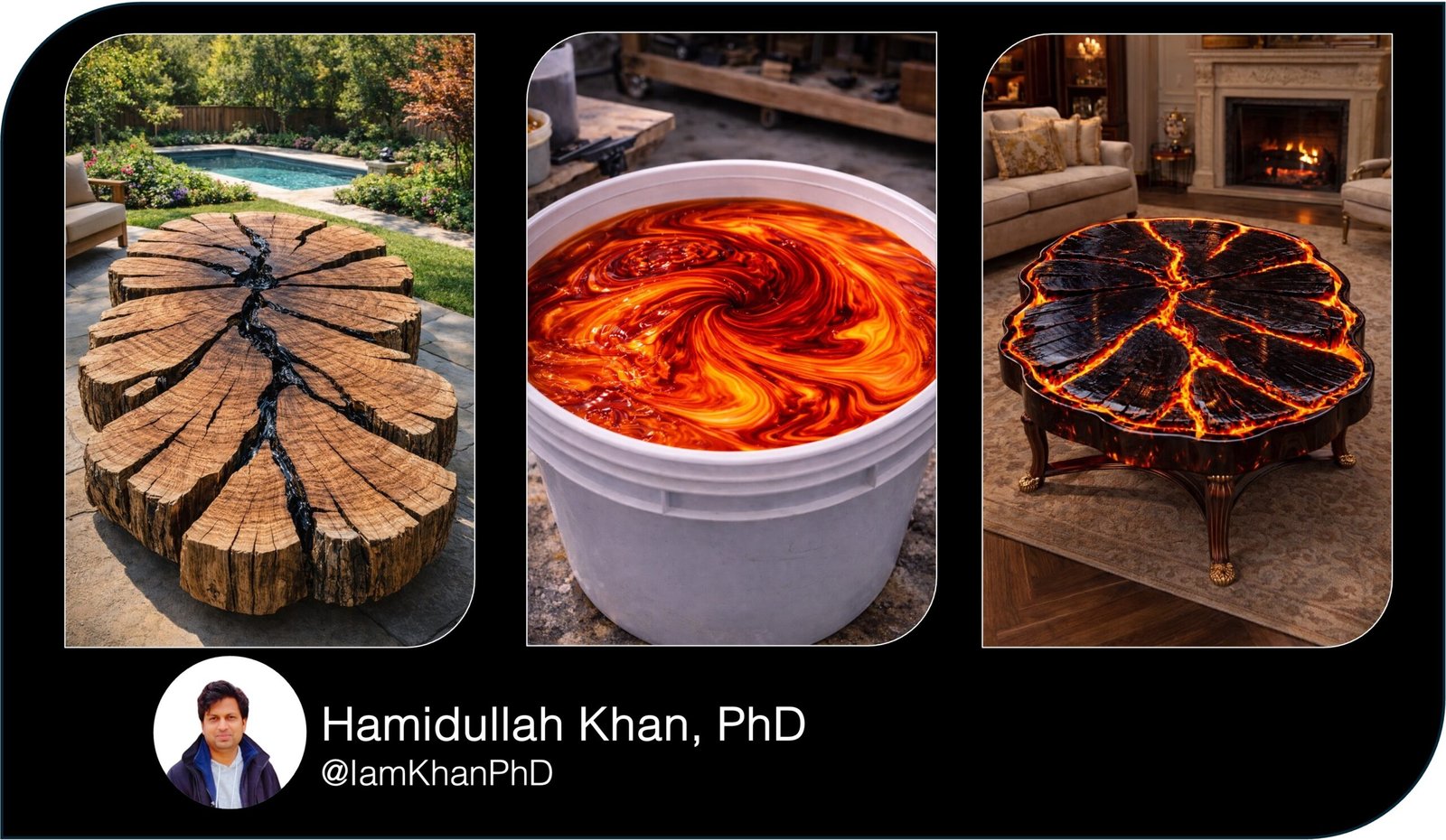
How I Made Satisfying Viral Resin Art Videos (Complete Prompts)
Creating viral, satisfying resin art videos with AI gets much easier when you give the model a clear visual journey from start to finish. In this post, I’m sharing a detailed Google Flow AI prompt for generating a fixed-camera fast timelapse-style resin tabletop video using first-frame and end-frame reference images. The prompt is designed to keep the action sequential and realistic—from burning the wood texture and mixing the resin to pouring, submerging, demolding, and ending with a cinematic room reveal. If you want polished short-form AI videos that feel visually rich and satisfying, this prompt gives you a strong starting point.
Master prompt
Prompt:
Create a highly realistic, visually satisfying fast timelapse-style resin art process video in a bright modern art studio. Use the first frame reference image for the starting composition and environment, and use the end frame reference image for the final table look, resin coverage, container removal result, and overall finished tabletop appearance.
The video should feel like a premium craft-process commercial: elegant, crisp, tactile, mesmerizing, and cinematic.
Maintain character consistency across all scenes: one white American woman, about 30 years old, same face, same hair, same clothes, same body proportions throughout the whole video.
Maintain table consistency and room consistency throughout all scenes.
The tabletop is a cracked black-burned wood slab inside a white rubber mold/container, later filled and submerged with resin until it matches the end frame reference image.Important motion rule: all process changes must happen progressively and sequentially, like authentic fast timelapse. Do not use sudden appearance, popping, jump cuts, instant transformation, or magical changes. Every change must visibly evolve frame by frame.
Style: ultra-realistic, cinematic product video, satisfying making-process content, vibrant resin art, polished luxury interior, controlled lighting, tactile material textures, glossy resin reflections, subtle smoke, molten resin glow, clean white container, premium workshop aesthetic.
Scene 1 — burning wood texture
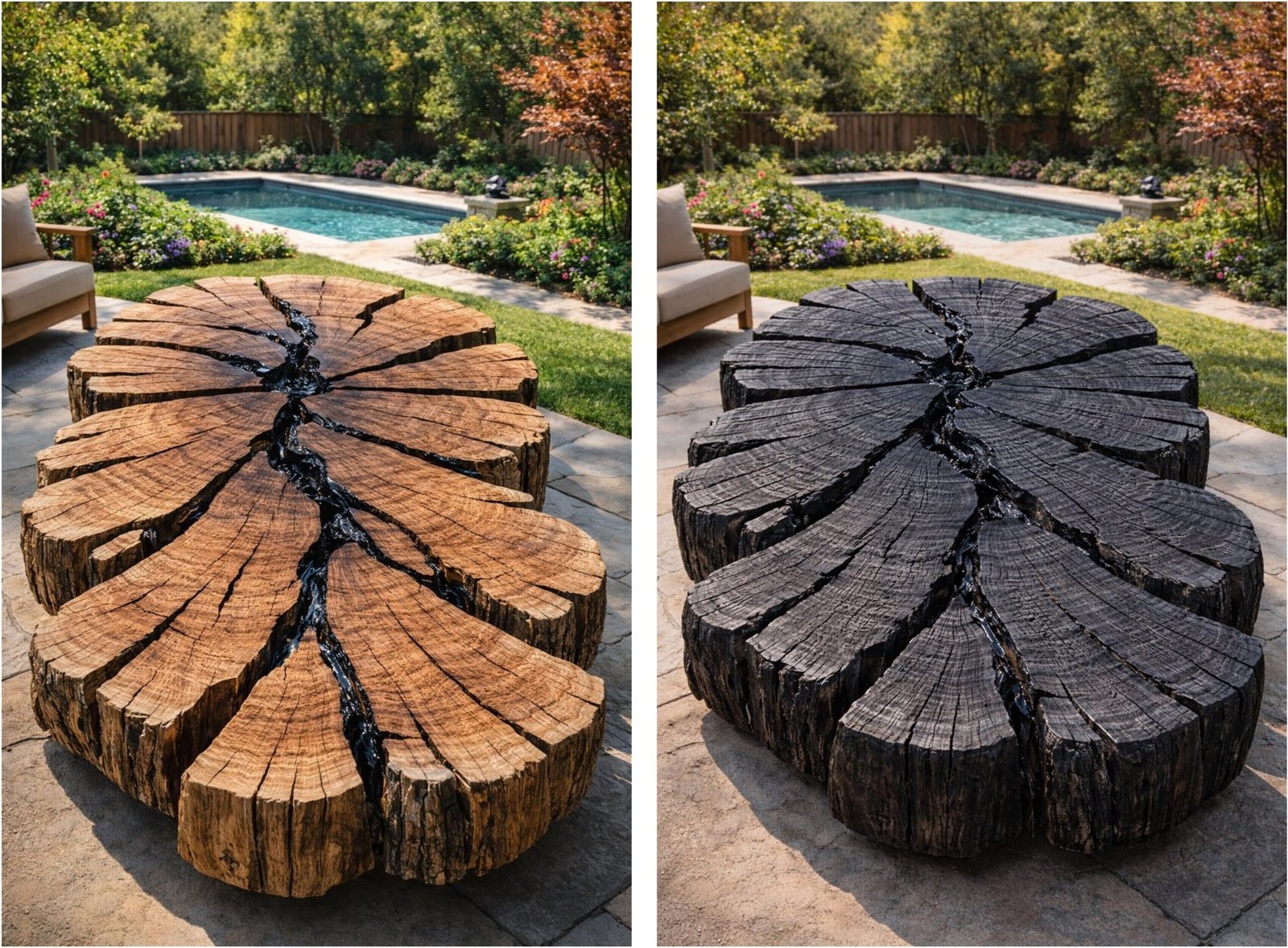
A fixed overhead-to-front angled camera shows the same woman using a large kitchen blow torch to burn the wood surface. The black char texture spreads gradually and sequentially across the wood, following the torch movement. The wood darkens naturally from raw wood to scorched black burned texture. Small flames, light smoke, glowing embers, and realistic burning patterns appear in a controlled way. This should feel like a fast timelapse of real burning, not an instant before/after switch. The burn marks should travel continuously and logically where the torch passes.
Scene 2 — yellow resin pouring and mixing
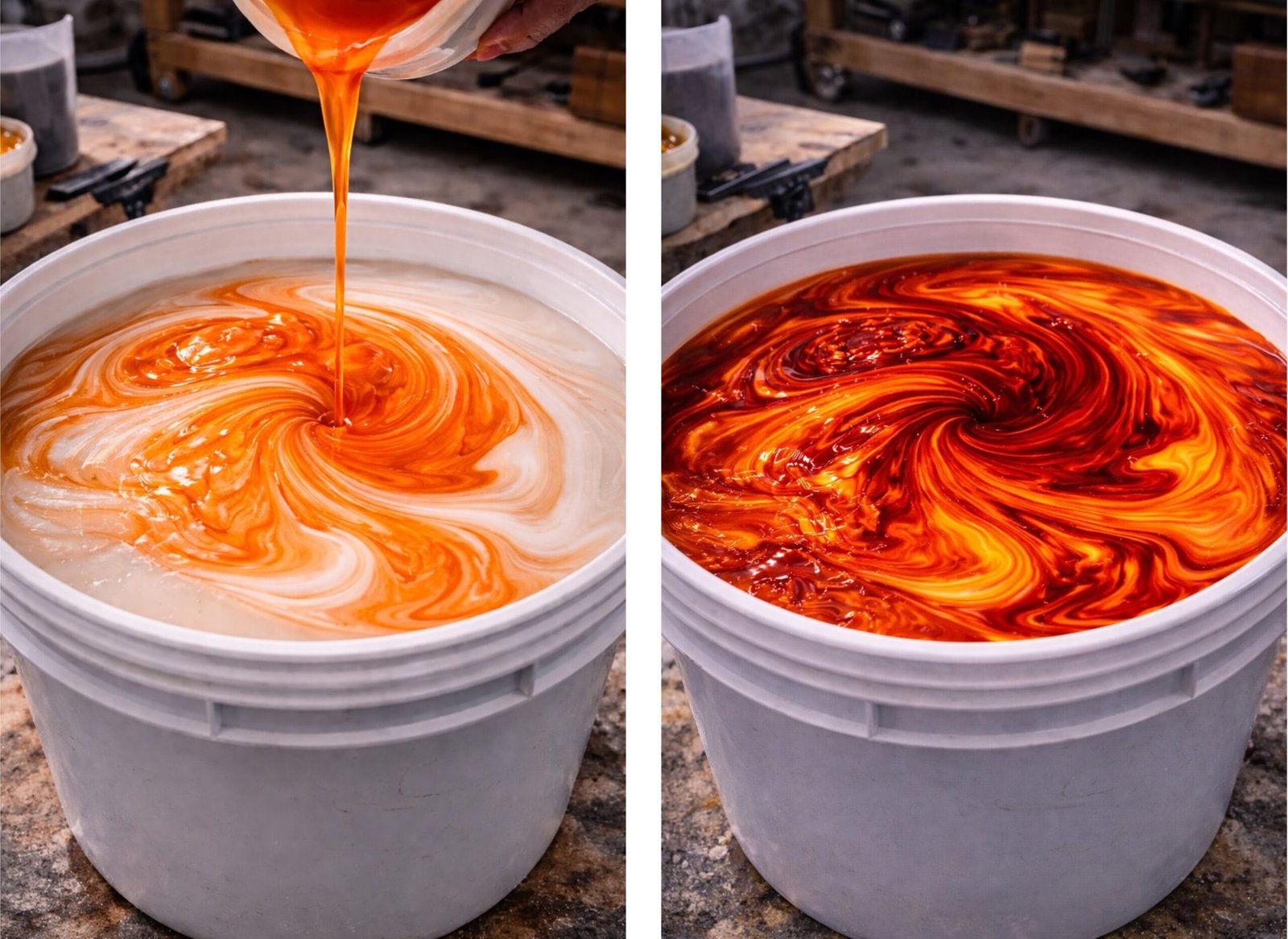
The same woman quickly pours yellow resin into a bucket, then uses an electric resin mixer to mix it rapidly. The mixing action should feel energetic and satisfying. The yellow color should develop progressively, swirling and blending in a realistic sequence. Show liquid viscosity, spinning patterns, folding color ribbons, and glossy reflections. The resin color transformation must be continuous and sequential, never suddenly appearing fully mixed.
Scene 3 — pouring molten lava resin into cracked burned wood
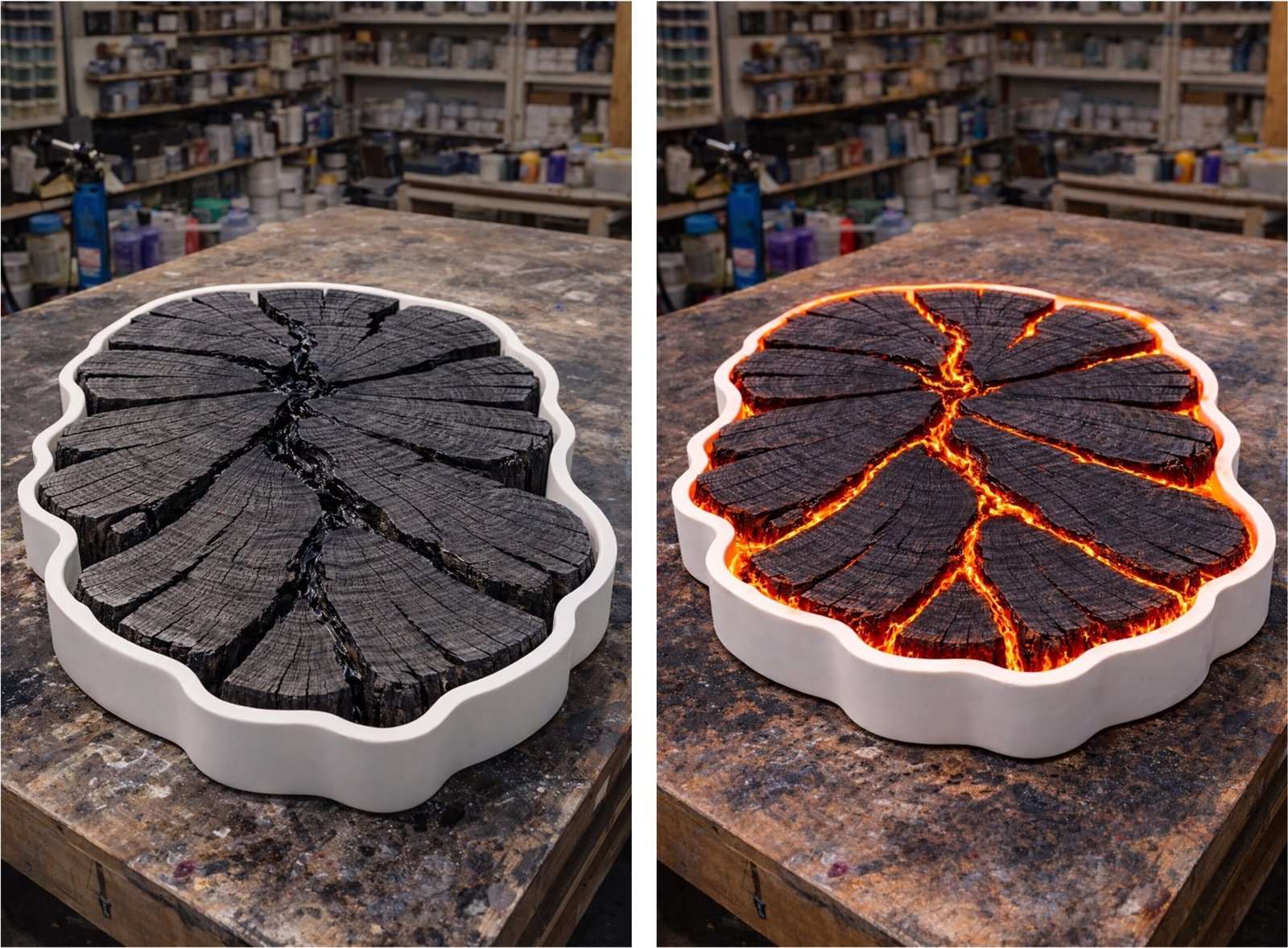
The same woman carefully pours a vivid molten lava-like resin from a large white bucket into the cracks and channels of the black-burned wood, inside the white rubber container. The resin flows smoothly through the cracked texture like glowing liquid filling the gaps. The pour should be controlled, elegant, and realistic. The resin level rises naturally. Keep the action as a fast timelapse but still physically believable. Focus on the contrast between the black cracked wood and the glowing warm resin.
Scene 4 — pouring white resin to submerge the black wood
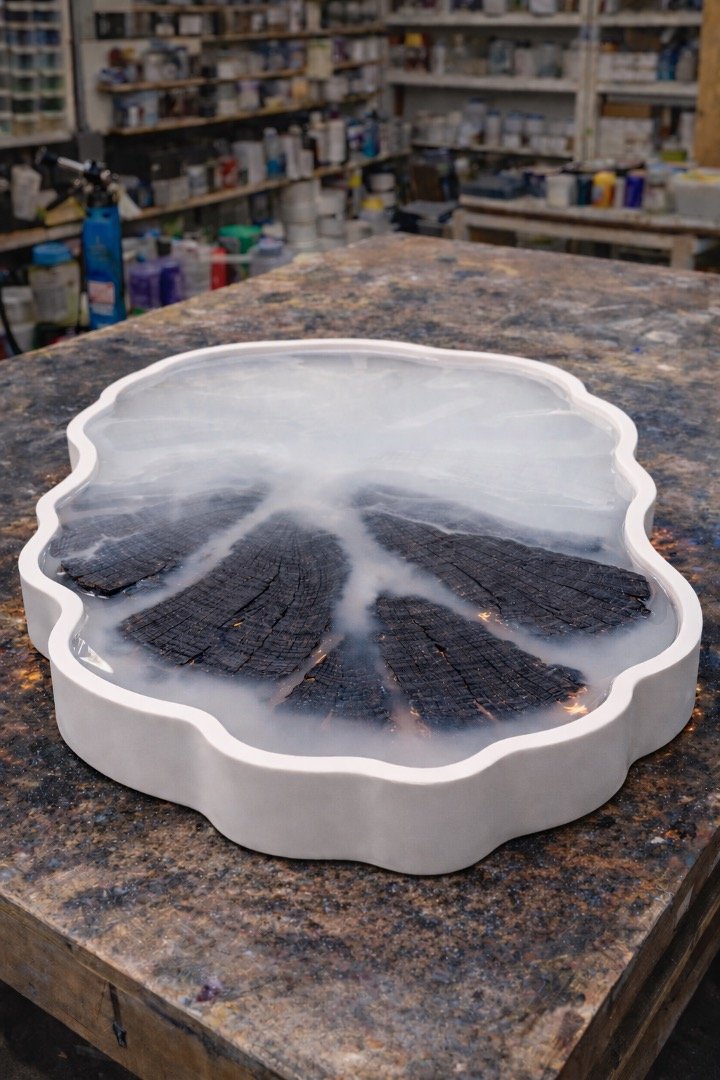
The same woman then pours white resin from a big bucket into the white rubber container, gradually surrounding and submerging the burned black wood and previously poured resin. The white resin level should rise progressively and smoothly, covering the darker areas step by step until the look approaches the attached end frame reference image. The transition must be clean and satisfying, with realistic liquid flow, glossy surface tension, and gentle ripples. No instant fill.
Scene 5 — removing the white rubber container
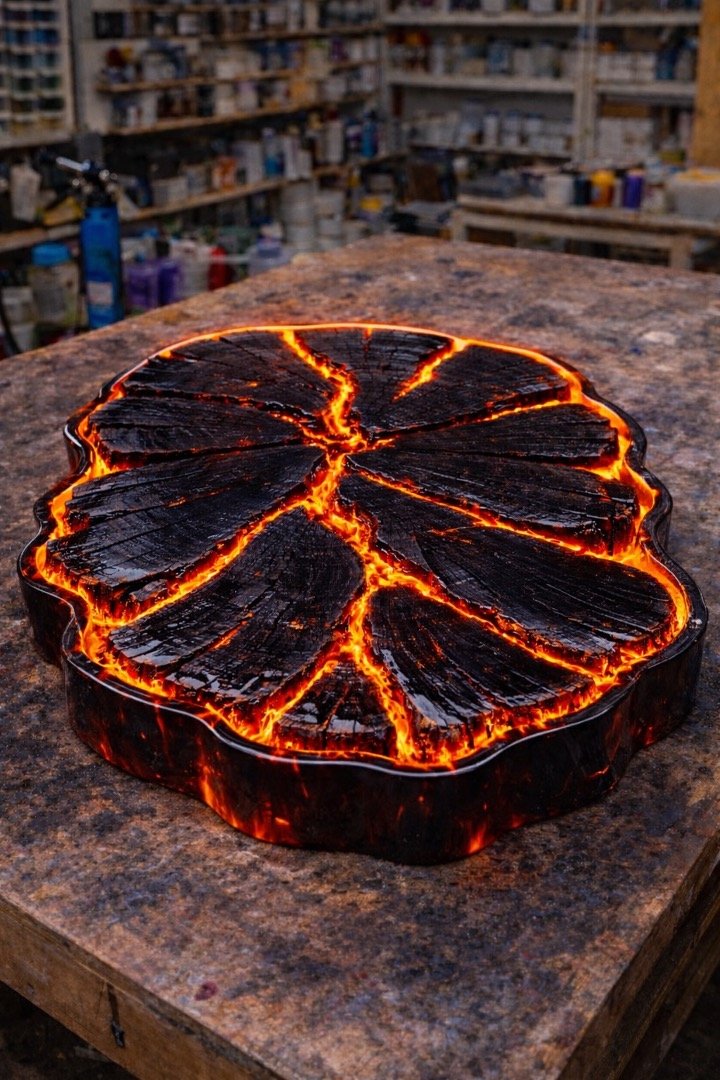
In fast timelapse style, the same woman starts removing the white rubber mold/container from the cured or semi-finished white resin tabletop, matching the appearance in the end frame reference image. The mold peeling and release should happen sequentially, showing edges lifting, sides flexing, and the finished resin table being revealed in a satisfying way. The table should match the attached end frame reference image closely in shape, resin coverage, color balance, and finish quality.
Scene 6 — cinematic room reveal
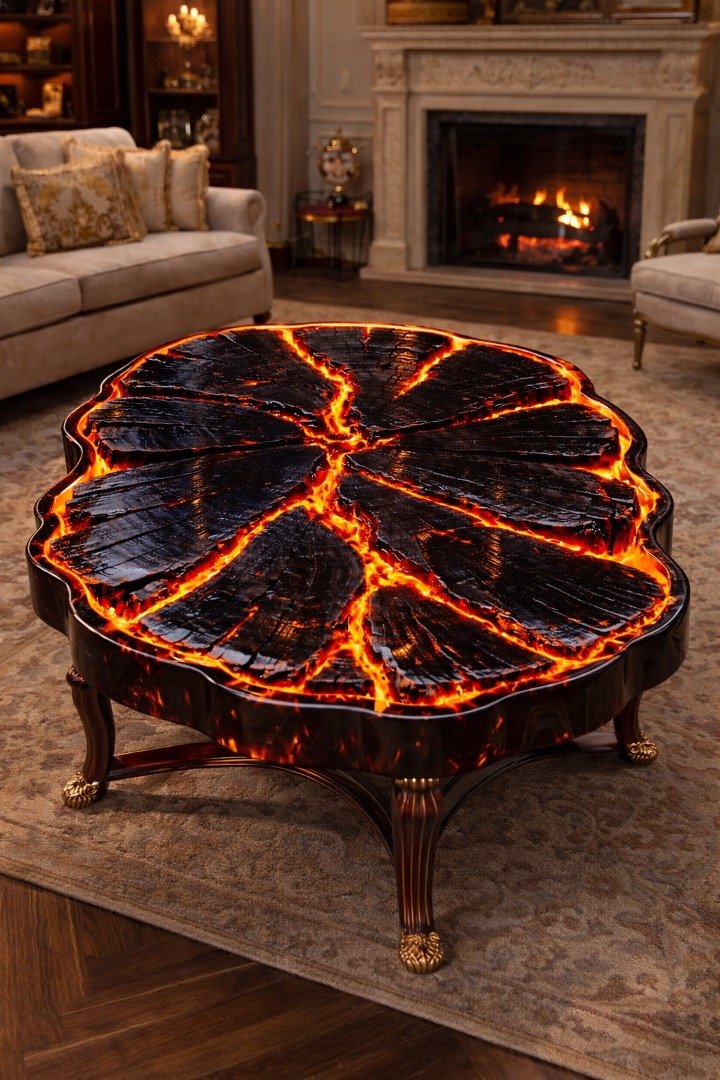
After the process shots, the camera begins a smooth cinematic movement to reveal the entire stunning room while keeping the resin table as the hero subject. Start near the tabletop surface, emphasizing the glossy finished resin, intricate black wood details, and elegant color contrast. Then transition into a graceful cinematic tour of the room: slow orbit, slight dolly movement, elegant parallax, luxury interior, warm ambient lighting, premium modern decor, and strong focus on the top of the finished table. End with a hero shot that closely matches the end frame reference image, showing the beautiful finished tabletop in the full room context.
Visual requirements
- fixed camera for process scenes 1–5
- no handheld shake
- authentic fast timelapse feeling
- all motion should be smooth, progressive, and continuous
- no sudden morphs
- no object teleportation
- no extra people
- no extra hands
- no changing face or outfit
- no tool changes unless specified
- keep the same room, same table, same mold, same woman
- glossy resin reflections
- strong texture detail on charred wood
- satisfying liquid motion
- premium cinematic color grading
- highly detailed realistic materials
- clean white studio/rubber mold contrast
- luxurious final room reveal
Timing and pacing
Total structure:
- Scene 1: about 8 seconds
- Scene 2: about 8 seconds
- Scene 3: about 8 seconds
- Scene 4: about 8 seconds
- Scene 5: about 8 seconds
- Scene 6: cinematic reveal, smooth ending shot
The process scenes should feel accelerated like social-media satisfying craft timelapse footage, but every material change must remain visible and sequential.
Negative prompt:
cartoon, illustration, CGI look, low realism, low detail, blurry, flicker, jump cuts, sudden appearance, instant transformation, magical fill, morphing face, changing identity, extra people, extra fingers, deformed hands, unstable bucket, floating tools, inconsistent resin color, inconsistent wood cracks, inconsistent mold shape, camera shake, handheld wobble, chaotic motion, broken physics, warped table, duplicated objects, melted anatomy, low-quality smoke, oversaturated fire, messy background, text, watermark, logo, subtitles


About author








Add comment