
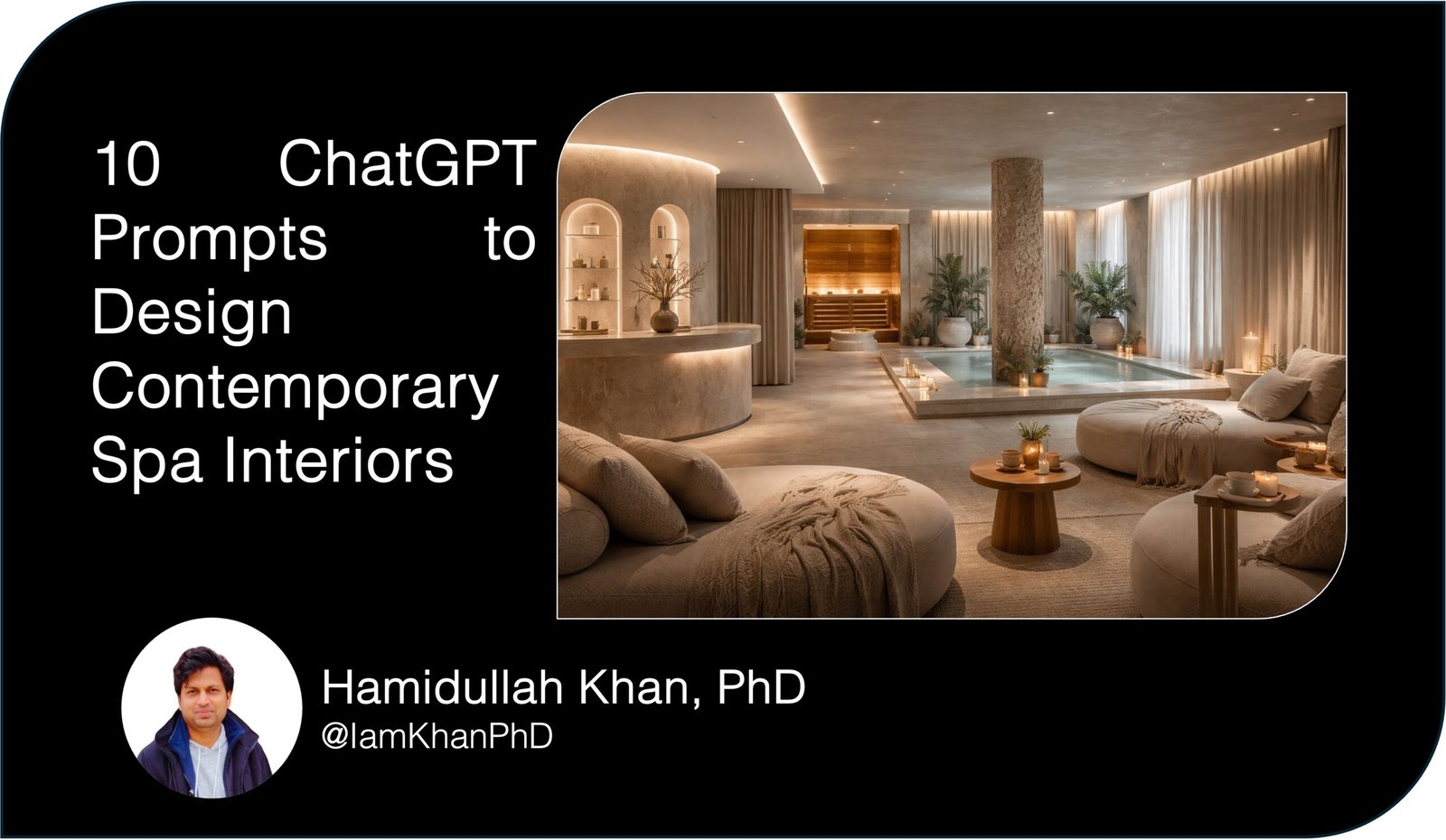
10 ChatGPT Prompts to Design Contemporary Spa Interiors
Contemporary spa interior design lives at the intersection of calm + clarity + craft. The best results come from prompts that force specifics (site constraints, brand vibe, guest journey, materials, lighting, operations) and produce deliverables you can actually use (concept boards, plans, FF&E, lighting specs, and a client-ready narrative).
What these prompts will do
- Turn vague ideas into clear design concepts with palettes, materials, and signature moments.
- Build functional layouts with guest flow + staff circulation that actually works.
- Generate spec-level guidance for treatment rooms, wet zones, lighting, and acoustics.
- Produce client-ready copy you can paste into decks and proposals.
1) “Concept-to-Design Direction” (3 strong concepts + rationale)
Prompt:
You are an award-winning contemporary spa interior designer. Create 3 distinct concept directions for a spa project using the inputs below. For each concept include:
Concept name + tagline
Design story (150–250 words) tying to wellness psychology
Color palette (5–7 colors with hex + where each color appears)
Material palette (8–12 materials with finishes)
Signature element (one unforgettable feature)
Lighting mood (layers + Kelvin range + fixtures)
Acoustics approach (materials + noise control)
Scent + sound cues (subtle, premium)
Budget alignment (value, mid, premium swaps)
Inputs:
Spa type (day spa / med spa / resort / urban retreat):
Size (sq ft / sqm):
Location + climate:
Target customer + price point:
Brand adjectives (e.g., “minimal, warm, tactile”):
Services (massage, hydro, sauna, facial, etc.):
Constraints (low ceiling, no daylight, odd column grid, etc.):
Budget range:
End with a clear recommendation of the best concept and why.
2) “Guest Journey + Zoning” (flow that feels effortless)
Prompt:
Act as a spa design strategist. Map the ideal guest journey for a contemporary spa from arrival → reception → waiting → lockers → treatment → recovery → retail → exit.
Produce:A step-by-step journey narrative (what the guest sees/feels/hears at each stage)
A zoning list with required spaces + “nice-to-have” spaces
Adjacency rules (what must be near/far; noise/odor/privacy conflicts)
Circulation strategy (guest flow vs staff/service flow)
3 layout options described in words (compact, balanced, luxury)
Project inputs: [paste size, services, number of treatment rooms, wet areas, accessibility needs, staff count, brand vibe].
3) “Treatment Room Master Spec” (the room that prints money)
Prompt:
You are designing a premium contemporary spa treatment room optimized for comfort, operations, and Instagram-ready calm. Provide:
Recommended room size range + clearances
Furniture plan (bed position, storage, therapist movement paths)
Lighting plan (ambient/task/accent, dimming scenes, Kelvin)
Materials (walls, floors, ceiling) that are warm but cleanable
Acoustics (NRC targets, softening strategies)
HVAC comfort notes (draft avoidance, humidity)
Client touchpoints (hooks, trays, charging, water ritual)
Brandable moment (signature detail)
“Avoid at all costs” list (common mistakes)
Constraints: [budget, room dimensions, services performed, any medical compliance].
4) “Reception + Retail That Doesn’t Feel Salesy”
Prompt:
Act as a hospitality interior designer specializing in modern wellness spaces. Design a reception + retail zone that feels calm and premium (not like a store). Provide:
2 reception desk concepts (materials + lighting + form)
Waiting area layout + seating mix (privacy vs community)
Retail integration strategy (merch hierarchy, sampling, storytelling)
Queue management without stanchions (subtle spatial cues)
Lighting scenes (arrival, peak, evening)
Finishes that resist wear and look expensive
A 60-second brand script staff can use that matches the interior vibe
Inputs: [brand tone, expected daily guests, product categories, space size].
5) “Wet Area + Sauna/Steam Design” (safe, serene, code-aware)
Prompt:
You are a spa interior designer collaborating with MEP/contractors. Create a concept + specification checklist for a contemporary wet zone (steam/sauna/showers/plunge or hydro). Include:
Space planning principles (privacy, circulation, sightlines)
Slip resistance + drainage strategy
Materials suitable for humidity + heat (with alternates by budget)
Lighting + vapor-rated fixture guidance (mood + safety)
Bench ergonomics + comfort details
Maintenance/cleaning considerations
Risk points + how to mitigate (mold, corrosion, burns, odor)
A short “bring to engineer” checklist of decisions needed
Project details: [which wet features, size, gender-neutral vs separated, local climate, budget].
6) “Material Palette Builder” (tactile + durable + contemporary)
Prompt:
Act as a materials expert for contemporary spa interiors. Based on my concept keywords, build a cohesive material palette that balances warmth, hygiene, durability, and sustainability.
Deliver:3 palette options (minimal warm, stone spa, soft modern)
For each: flooring, wall cladding, paint, ceiling, millwork, stone, metal, textiles
Finish specs (matte/satin honed/brushed)
Durability notes (scratches, staining, humidity)
Cleaning/maintenance guidance
“Upgrade swaps” and “budget swaps”
Inputs: [concept words, budget tier, location, high-traffic zones, wet zones].
7) “Lighting Design Scenes” (the real luxury)
Prompt:
You are a lighting designer for a high-end contemporary spa. Create a lighting scheme with scene settings for each zone: reception, corridors, lockers, treatment, wet areas, relaxation lounge.
Provide:Target lux levels (ranges) + dimming approach
Kelvin guidance per zone
Fixture types (downlights, wall wash, cove, floor-level guidance)
Glare control strategies
5 preset scenes (Arrival, Day Calm, Evening Ritual, Cleaning, Emergency)
Notes for photography-friendly lighting without harshness
Inputs: [ceiling heights, natural light availability, finishes reflectivity, brand mood].
8) “Relaxation Lounge & Ritual Bar” (signature ‘stay longer’ moment)
Prompt:
Act as a boutique-hotel interior designer specializing in wellness. Design a contemporary spa relaxation lounge with a small ritual tea/water bar.
Include:Seating plan concepts (quiet cocoons vs open lounge)
Materials + textiles that read serene but are stain-resistant
Acoustic zoning (soft partitions, sound masking, layout tricks)
Scent strategy + air flow placement so it’s subtle
Ritual bar design (menu board, vessels, storage, cleanup)
A “signature photo spot” that still feels authentic
Inputs: [square footage, guest volume, brand adjectives, operating model].
9) “Small Spa Layout Hack” (under 1,500 sq ft / 140 sqm)
Prompt:
You are designing a compact contemporary spa in a small footprint. Optimize every inch without feeling cramped.
Provide:Priority list (must-haves vs cut safely)
2 layout strategies (linear + clustered) with pros/cons
Storage plan (linen, supplies, back bar, cleaning)
Tricks to make it feel bigger (mirrors used intelligently, lighting, thresholds)
Privacy strategies in tight corridors
Cost-aware finish plan (where to splurge vs save)
Inputs: [exact size, services, number of rooms, constraints].
10) “Client-Ready Presentation Pack” (copy/paste deliverable)
Prompt:
Act as a spa interior designer preparing a client presentation. Using the project info below, generate a client-ready presentation narrative including:
Project goals + design principles
Concept story (1–2 pages)
Palette summary (colors, materials, textures)
Zone-by-zone walkthrough (what changes + why it matters)
FF&E direction (key pieces and what they achieve)
Lighting + acoustic approach (simple, reassuring language)
Budget strategy (where investment shows; value engineering options)
Next steps + decisions needed from client
Write it in a polished, premium tone.
Inputs: [brand, target customer, layout, budget tier, services, must-keep elements].
How to use these prompts
- Replace the brackets [ ] with your project details (size, services, budget, constraints).
- Ask for 2–3 options per output, then select one direction to refine.
- Follow up with: “Now create a detailed plan for Zone X using Concept #2”.
- Iterate: “Make it 20% warmer, more minimal, or more luxe—without increasing cost”.
Tips to get the best results
- Always provide ceiling height, daylight availability, and wet features (big design drivers).
- State a budget tier (value / mid / premium) so materials and fixtures stay realistic.
- Add brand adjectives (3–5 words) and guest profile to keep design consistent.
- Ask for mistakes to avoid + maintenance notes to prevent beautiful-but-impractical designs.


About author





Add comment