
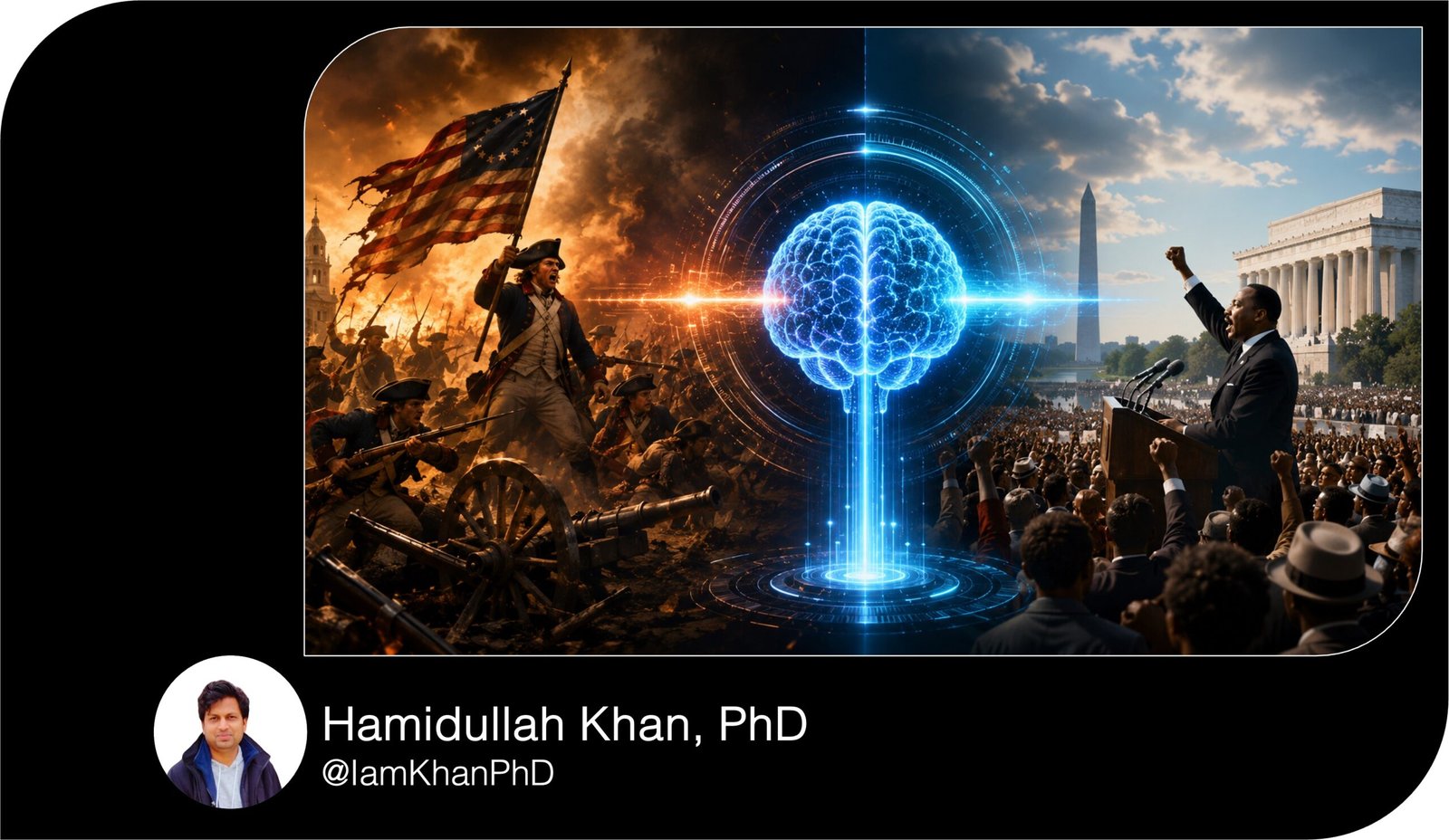
10 AI Prompts for Comparing Two Historical Events
A ready-to-use collection of detailed AI prompts designed to help users compare two historical events clearly, deeply, and creatively. Perfect for students, teachers, content creators, bloggers, and anyone who wants better AI-generated history comparisons without writing prompts from scratch.
What This Prompt Does
- Helps users compare two historical events by causes, effects, people, timelines, similarities, differences, and long-term impact.
- Creates structured outputs such as essays, tables, timelines, debate formats, student notes, and social media carousels.
- Makes history easier to understand for beginners by guiding AI to explain complex events in simple, organized language.
Tips for This Prompt
- Replace [Historical Event 1] and [Historical Event 2] with specific events, such as “World War I” and “World War II.”
- Add your audience level, such as middle school, high school, college, or general readers, for better results.
- Ask the AI to include sources or fact-check important dates if you need the answer for academic or professional use.
How to Use the Prompt
- Copy one prompt from the list and paste it into ChatGPT, Gemini, Claude, or any AI writing tool.
- Edit the bracketed sections like [Historical Event 1], [Historical Event 2], [word count], and [audience level].
- Review the AI response, check important facts, and customize the final answer for your schoolwork, blog, lesson, or social media post.
10 Editable AI Prompts for Comparing Two Historical Events
1. Beginner-Friendly Historical Event Comparison Prompt
Prompt:
Compare [Historical Event 1] and [Historical Event 2] in a simple, beginner-friendly way for an audience of [students/general readers/social media followers].
Please include:
- A short introduction explaining what both events were.
- The time period and location of each event.
- The main causes behind each event.
- The key people, groups, or governments involved.
- The major actions or turning points.
- The short-term effects.
- The long-term impact on society, politics, culture, or the world.
- A clear list of similarities between the two events.
- A clear list of differences between the two events.
- A final conclusion explaining which event had a greater impact and why.
Use simple language, avoid complicated academic wording, and explain any difficult terms. Present the answer with headings and bullet points where helpful.
2. Historical Events Comparison Table Prompt
Prompt:
Create a detailed comparison table between [Historical Event 1] and [Historical Event 2].
The table should compare the events using these categories:
- Date or time period
- Location
- Main causes
- Main leaders or groups involved
- Political background
- Economic background
- Social or cultural factors
- Key turning points
- Main outcomes
- Short-term consequences
- Long-term consequences
- Similarities
- Differences
- Historical importance
After the table, write a short summary in [100/200/300] words explaining the biggest lesson people can learn from comparing these two events.
Use clear and simple language suitable for [beginners/students/content creators/general readers].
3. Cause-and-Effect Comparison Prompt
Prompt:
Analyze and compare the causes and effects of [Historical Event 1] and [Historical Event 2].
For each event, explain:
- The background situation before the event happened.
- The main political causes.
- The main economic causes.
- The main social or cultural causes.
- The immediate trigger that started the event.
- The short-term effects.
- The long-term effects.
- How the event changed the country, region, or world.
Then compare both events by answering:
- Which causes were similar?
- Which causes were different?
- Which event created bigger short-term changes?
- Which event created bigger long-term changes?
- What historical pattern can we learn from both events?
Write the answer in a structured format with clear headings. Make it easy for a beginner to understand.
4. Timeline-Based Historical Comparison Prompt
Prompt:
Create a timeline comparison of [Historical Event 1] and [Historical Event 2].
For each event, include:
- Important dates
- Key developments before the event
- Major turning points during the event
- Important decisions made by leaders or groups
- The ending or result of the event
- What happened after the event
Then create a side-by-side comparison showing how the two timelines are similar or different.
After the timelines, explain:
- Which event developed more quickly.
- Which event had more complex causes.
- Which event had more lasting consequences.
- What modern readers can learn from comparing them.
Use a simple tone and organize the answer so it can be used for a school project, blog post, or social media carousel.
5. Essay-Style Historical Comparison Prompt
Prompt:
Write a detailed comparison essay about [Historical Event 1] and [Historical Event 2].
The essay should include:
- A strong introduction with a clear thesis statement.
- One paragraph explaining the background of [Historical Event 1].
- One paragraph explaining the background of [Historical Event 2].
- A paragraph comparing the causes of both events.
- A paragraph comparing the key people, groups, or governments involved.
- A paragraph comparing the outcomes and consequences.
- A paragraph explaining the similarities.
- A paragraph explaining the differences.
- A conclusion that explains why comparing these two events is historically important.
Write the essay for [middle school/high school/college/general audience] level. Keep the tone [simple/academic/storytelling/professional] and the length around [500/800/1000] words.
6. “Similarities and Differences” Deep Comparison Prompt
Prompt:
Compare [Historical Event 1] and [Historical Event 2] by focusing only on similarities and differences.
Divide the answer into two main sections:
Section 1: Similarities
Explain at least [5/7/10] important similarities between the two events. For each similarity, explain why it matters historically.
Section 2: Differences
Explain at least [5/7/10] important differences between the two events. For each difference, explain how it changed the outcome of the event.
Include comparisons related to:
- Causes
- Leadership
- Public reaction
- Government response
- Violence or conflict
- Social change
- Economic impact
- Global influence
- Long-term legacy
End with a short conclusion answering this question:
“Are these two events more similar or more different? Explain why.”Use clear, beginner-friendly language.
7. Social Media Carousel Prompt for Historical Event Comparison
Prompt:
Create a social media carousel post comparing [Historical Event 1] and [Historical Event 2].
The carousel should have [7/8/10] slides.
Use this format:
Slide 1: Hook title that grabs attention
Slide 2: Quick explanation of Event 1
Slide 3: Quick explanation of Event 2
Slide 4: Main causes compared
Slide 5: Key people or groups compared
Slide 6: Biggest similarities
Slide 7: Biggest differences
Slide 8: Long-term impact of both events
Slide 9: Key lesson from history
Slide 10: Call-to-action question for the audienceMake each slide short, clear, and easy to understand. Use simple language and make it engaging for people who are not history experts.
Also provide:
- A caption for the post
- 5 hashtags
- A short hook for Instagram, TikTok, or LinkedIn
8. Debate-Style Historical Comparison Prompt
Prompt:
Compare [Historical Event 1] and [Historical Event 2] in the form of a balanced debate.
The main debate question is:
“Which historical event had a greater impact: [Historical Event 1] or [Historical Event 2]?”
Structure the answer like this:
- Opening statement for why [Historical Event 1] was more important.
- Opening statement for why [Historical Event 2] was more important.
- Evidence supporting Event 1.
- Evidence supporting Event 2.
- Similarities between the two events.
- Major differences between the two events.
- Counterarguments for both sides.
- Final balanced judgment.
Make sure the answer does not unfairly favor one event unless the evidence clearly supports it. Use a respectful, educational tone suitable for students or online audiences.
9. Historical Comparison for Students Prompt
Prompt:
Help me compare [Historical Event 1] and [Historical Event 2] for a student assignment.
Please create:
- A simple explanation of both events.
- A comparison chart.
- 5 similarities.
- 5 differences.
- Important dates to remember.
- Important people or groups involved.
- Main causes of each event.
- Main effects of each event.
- 3 possible essay thesis statements.
- 5 discussion questions.
- A short conclusion paragraph.
Write this for a [middle school/high school/college] student. Keep the explanation clear, organized, and easy to study from.
10. Critical Thinking Historical Comparison Prompt
Prompt:
Compare [Historical Event 1] and [Historical Event 2] using critical thinking, not just basic facts.
Please analyze:
- What problems existed before each event?
- Who benefited from each event?
- Who suffered because of each event?
- How did leaders, governments, or powerful groups influence the outcome?
- How did ordinary people experience the event?
- What role did economics, religion, nationalism, race, class, or ideology play?
- How did media, communication, or public opinion affect the event?
- What myths or misunderstandings exist about each event?
- What lessons can modern society learn from comparing them?
End with a balanced conclusion explaining how comparing these events helps us understand history more deeply.
Use clear explanations and define difficult terms for beginners.


About author










Add comment